Wood, metal, and the myth of the eco medal
In October 2025, I ran my second ever 50k. It was trailsy, hilly, and actually rather gorgeous – much more elevation than the only other 50k I’d run. At about mile 18, I dragged myself up the 275 steps of Box Hill (it felt like more!), but I was barely halfway.
I plodded on and, as is becoming usual for me, I came last. But I did finish. What I’m trying to say is: it was hard work. I’d trained hard, fought hard, and what was my reward? A wooden medal.
I wanted to love it. The design was minimalist – a runner heading for the hilly trails of Surrey with the name of the race emblazoned above, all in shades of brown reminiscent of pyrography. It was certainly big; if it didn’t have so many die-cut parts, it might have made a nice coaster. A nice conversation piece. But it wasn’t metal. I felt cheated.
But should I? If wood is the eco-option, surely I should be pleased. Don’t I want to save the planet?
True, wood has a low carbon footprint. Trees suck carbon out of the air, laser cutting takes very little energy, and wooden medals are lightweight to ship. Metal medals are usually made from zinc alloy (Zamak). Mining zinc is energy-intensive and heavy to ship, often from China. The manufacture of metal medals can create 20 to 30 times more CO2 than wooden ones.
However, there is a catch. Most wooden medals are made from plywood or MDF held together with resins containing formaldehyde or plastic, so they aren’t biodegradable. While most recycling centres have a wood recycling bay, the truth is that MDF is almost never turned back into MDF. The glues make it too toxic to compost and difficult to pulp. Because of the glues, MDF is classed as ‘Grade C waste wood’. This means it cannot be recycled into new wood products. Instead, it goes to an energy-from-waste incinerator (to burn for electricity). While better than landfill, this is still a linear process – the material is destroyed forever to generate a tiny spark of power. It is not recycling. It is just a slower end.
The zinc alloy medal may take more energy to produce, but recycling it is incredibly simple. Drop it in the scrap metal bay of the recycling centre and it will be sorted by a process involving manual inspection, density testing, and optical sensors.. Zinc alloy has a low melting point (approx 385°C) compared to other metals, so it can be melted in a furnace and poured into a mould for a new medal, keeping 100% of the material quality of the original.
So that’s the trade-off. Wooden medals take less energy to make but end their life in landfill: either as they are or as the ashes from an energy-from-waste plant. We get a small return from the energy provided in the latter but in reality this is a perfect example of the Linear Economy (take -> make -> waste). For a medal that represents the Circular Economy, you want zinc alloy. It costs more carbon to create, but it is infinitely recyclable.
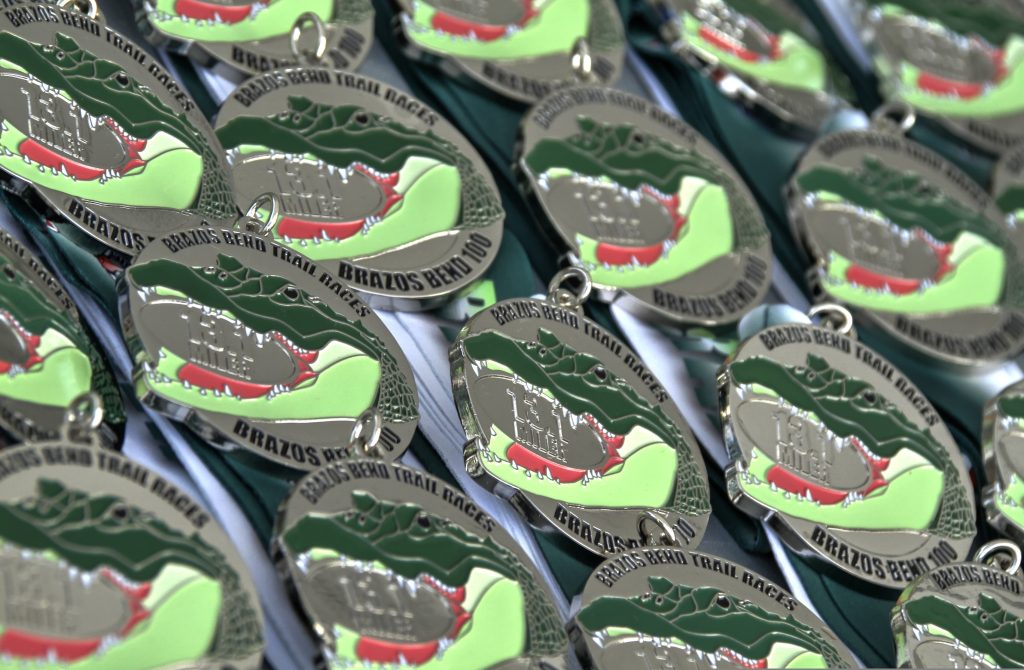
Image by GILBERTO MELLO from Pixabay
But there is another option. Many runners are choosing it because it requires zero carbon to create and zero energy to recycle. That’s because it isn’t a medal at all. It is the option to opt out. The only zero carbon, zero waste option. It might not hang on your wall, but it is the only truly Leave No Trace reward.